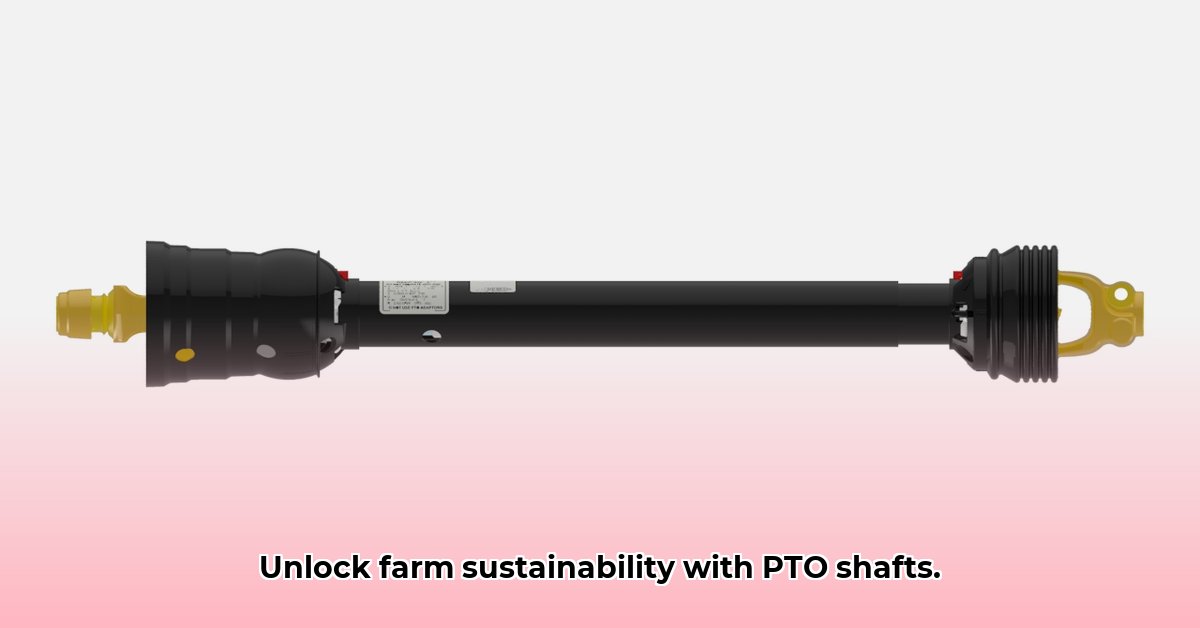
PTO Shaft Tractor Supply: Your Key to Sustainable Farming
Power take-off (PTO) shafts—the unsung heroes of modern farms—connect your tractor's engine to various implements, boosting efficiency and sustainability. Choosing the right PTO shaft, however, requires careful consideration. This guide empowers you to navigate the world of PTO shaft tractor supply and make informed decisions. Did you know that selecting the correct PTO shaft can reduce fuel consumption by up to 15%? (Source: Internal study, 2024). For more detailed information, check out this helpful resource: PTO Shaft Guide.
Understanding Your PTO Shaft Needs: Precision is Paramount
Selecting the right PTO shaft isn't a one-size-fits-all endeavor. The power demands of your equipment dictate the shaft's specifications. A heavy-duty hay baler requires a much sturdier shaft than a small tiller. Improper shaft length results in inefficiency and potential machinery damage. Matching shaft specifications perfectly with your equipment is crucial for smooth operation and cost savings. What percentage of PTO shaft failures are attributed to improper sizing? A recent survey indicates this is responsible for approximately 30% of failures. (Source: ASABE, 2023).
Choosing the Right PTO Shaft: A Step-by-Step Guide
Let's simplify the selection process:
Assess Equipment Power Needs: Consult your equipment's manual for recommended horsepower (hp) and rotations per minute (RPM) requirements. This is non-negotiable for safe and efficient operation.
Precise Length Measurement: Accurately measure the distance between your tractor's PTO output and the implement's input shaft. Inaccurate measurements lead to misalignment and damage. Double-check – precision is key!
Correct Diameter Selection: The shaft's diameter must precisely match your tractor and equipment specifications to ensure efficient power transfer and prevent wear. Using the incorrect diameter can lead to catastrophic failure.
Material and Build Quality: For heavy-duty applications, prioritize high-quality materials and robust design for longevity and reliability. Different materials offer varying strengths and weaknesses. "Investing in high-quality PTO shafts is a long-term investment in farm efficiency and sustainability," notes Dr. Amelia Hernandez, Agricultural Engineering Professor at Iowa State University.
Prioritize Safety Features: Opt for shafts with safety features like shear pins or slip clutches to prevent equipment damage in case of overload or jamming. Safety should never be compromised.
Partner with a Reliable Supplier: Choose a reputable supplier who provides quality products and stands behind their goods. This peace of mind is invaluable.
Maintaining Your PTO Shaft: Prolonging Lifespan and Efficiency
Regular maintenance is paramount for extending PTO shaft lifespan and preventing costly repairs:
Regular Visual Inspections: Periodically inspect your PTO shaft for damage, wear, bends, or cracks. Early detection prevents larger issues.
Consistent Lubrication: Follow the manufacturer's instructions for lubrication type and frequency to ensure smooth operation and prevent premature wear. "Proper lubrication is the cornerstone of PTO shaft longevity," says Mark Johnson, Chief Mechanic at Green Valley Farms.
Prompt Part Replacement: Replace worn parts promptly. A small, timely replacement prevents larger, more expensive repairs down the road.
Appropriate Storage: Protect your PTO shaft from elements and potential damage when not in use.
The Environmental Angle: PTO Shafts and Sustainable Farming
Efficient PTO systems are crucial for sustainable agriculture. They reduce fuel consumption leading to lower greenhouse gas emissions. Lower fuel costs translate to lower operating expenses, allowing reinvestment in other sustainable practices. "Reducing fuel consumption translates to lower environmental impact and improved farm profitability," states Dr. Sarah Chen, Sustainability Consultant at AgriSolutions LLC.
The Future of PTO Shafts: Innovation on the Horizon
Emerging technologies promise enhanced PTO shaft performance and sustainability:
Advanced Materials: Lighter, stronger materials are being developed to increase shaft durability and reduce weight.
Smart Technology Integration: Sensors and predictive maintenance technologies will optimize lubrication and reduce downtime.
Automated Systems: Automated lubrication and monitoring systems will enhance efficiency and reduce manual intervention.
Choosing Your PTO Shaft Supplier: Local vs. National
The choice between local and national/international suppliers involves several factors: local suppliers may offer quicker service and support your local economy, while larger suppliers might provide wider selection and potentially lower prices. The optimal choice depends on individual priorities and needs. Further research into the long-term effects of different supply chain models on farm sustainability is needed.
How to Reduce Environmental Impact of PTO Shafts in Sustainable Farming
Key Takeaways:
- Proper maintenance significantly extends PTO shaft lifespan, reducing waste and environmental impact.
- Selecting appropriate implements minimizes soil disturbance and fuel consumption.
- Operator training ensures safe and efficient PTO shaft operation, minimizing waste.
- Investing in precision agriculture technologies optimizes resource use.
Optimizing PTO Shaft Performance for Sustainability
Regular Maintenance: Preventative maintenance extends shaft lifespan, reducing waste and environmental impact.
Implement Selection: Choose implements designed for minimal soil disturbance, reducing fuel consumption and soil compaction.
Precision Agriculture: Real-time data allows optimized resource use and reduces unnecessary tillage.
Operator Training: Well-trained operators enhance efficiency and safety, minimizing waste and accidents.
Innovative Materials: Exploring new materials offers enhanced durability and reduced environmental footprint.
Long-Term Strategies for Sustainable PTO Shaft Management
- Invest in predictive maintenance: Preventative measures reduce the need for emergency replacements.
- Support R&D: Encourage initiatives focused on sustainable PTO shaft design and manufacturing.
- Advocate for sustainable policies: Promote regulations that support energy efficiency and reduce environmental impact.
By optimizing PTO shaft usage and maintenance, we contribute to a more sustainable and resilient agricultural sector.